My Dad Inducted into Army Aviation’s Order of Saint Michael

image1

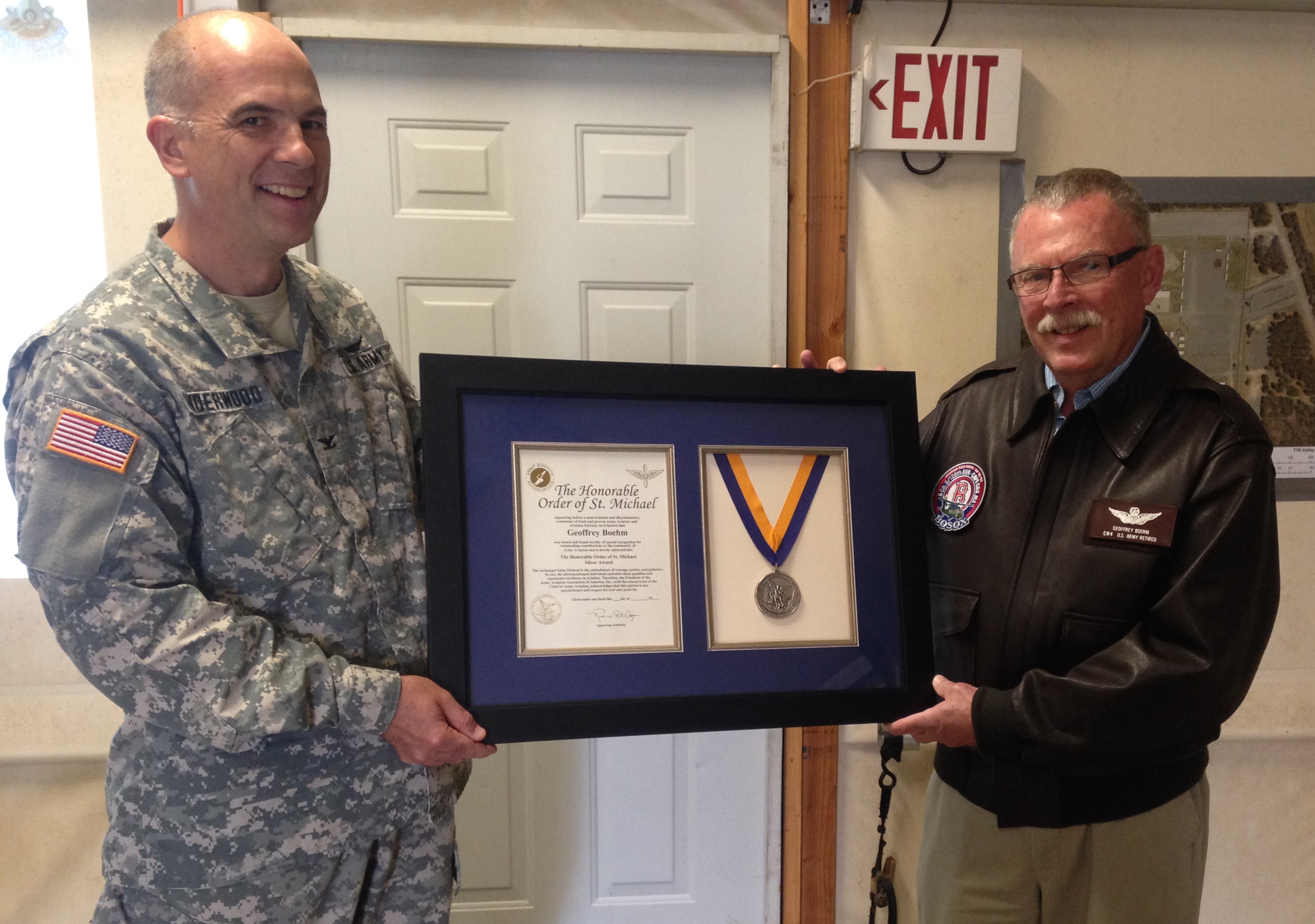
My dad, CW4 Geoff Boehm (U.S. Army – retired) was inducted into the Order of Saint Michael (OSM) at the Silver Award level. Those who receive this honor “have contributed significantly to the promotion of Army Aviation in ways that stand out in the eyes of the recipient’s seniors, subordinates, and peers” and demonstrated “the highest standards of integrity and moral character, display an outstanding degree of professional competence, and serve the United States Army Aviation.” So very proud of him.

More information on this recognition.

Mr. Hammersley on the Ship Thomas P. Cope

William S.  Hammersley “was a manufacturer of chinaware in England, which business he followed until 1843, in which year he emigrated to America, locating in New York City, where he became an importer of china and earthenware.” When he made that transatlantic crossing on 20 May 1843, he seems to have come alone, with his family to follow sometime later.

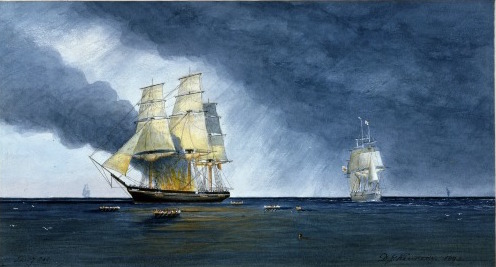
The ship he came on was the Thomas P. Cope:

The Thomas P. Cope was a packet ship that sailed between Philadelphia and Liverpool, making 21 round-trip voyages between 1839 and 1846. In December 1846 the ship was struck by lightning and burned for six days before sinking. (source)

Independence Seaport Museum 014


Cover Photo Source.

The S.S. Baltic: Bringing the Gaudiosis to America

The people were newlyweds Leopoldo and Artemesia Gaudiosi.
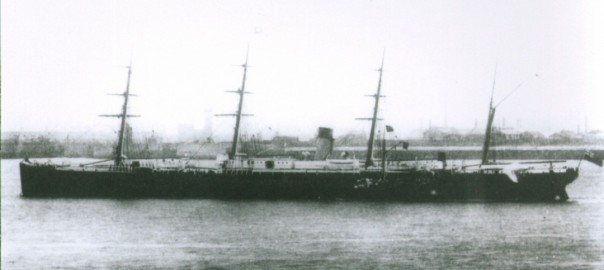
The S.S. Baltic was that ship.
The date November 22, 1879.*

"Whitestarline" by Whistlerpro - Own work. Licensed under CC BY-SA 3.0 via Wikimedia Commons
“Whitestarline” by Whistlerpro – Own work. Licensed under CC BY-SA 3.0 via Wikimedia Commons

The ship was constructed of iron and had three full decks. It could be rigged as a four masted barque and during it’s career the sails were indeed used. The hull was launched on 8 March 1871 under the name Pacific. However on delivery on 18 September she was renamed in Baltic for the Oceanic Steam Navigation Company. This company was better known as the White Star Line. (Upon delivery she measured 3,707 Brt. and could carry 166 First and 1000 Third Class passengers)

She commenced her maiden voyage on 14 September 1871 sailing from Liverpool to New York. The ship was a very fast one and on 19 January 1873 she won the Blue Riband after a record crossing over the North Atlantic (Eastbound) in a time of 7 Days 15 Hours and 9 Minutes. (Making 15.09 Knots on average). (Source)

For me, seeing the ship and knowing the date they sailed makes their voyage to America all the more real. Next tasks:

  1. Find out how they would have gotten from Colliano, Italy to Liverpool or Queenstown, England to catch the S.S. Baltic
  2. Find some firsthand accounts of what a cross-Atlantic voyage aboard the S.S. Baltic or similar vessel would have been like to add that storyline to my family history.

veendam-one

The “List or Manifest” was “sworn to on 22 Nov 1879.

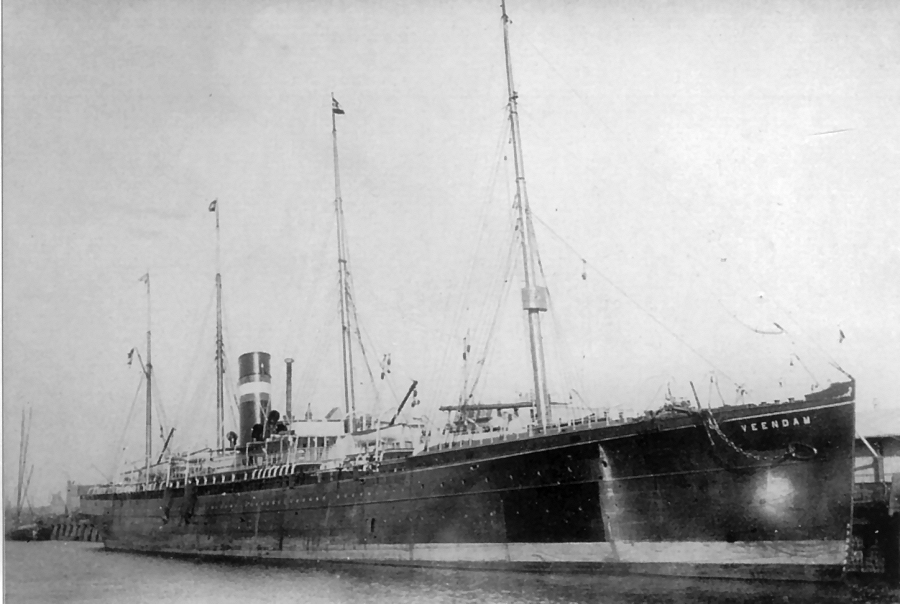
Photo Source: Captain Albert’s Blog: Stories from the Sea, Past and Present, Holland America Blog, Veendam (I) of 1889.

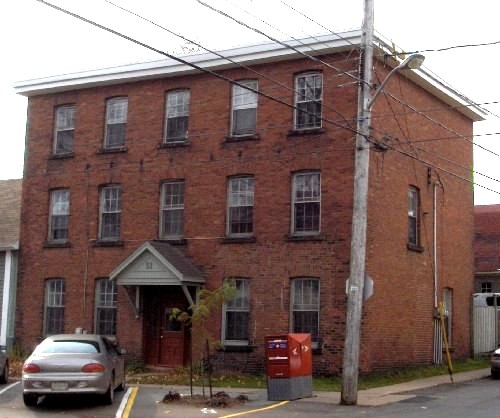
51 Prince Street – Built by William Wright

From PEI Historic Places:

WHY IS THIS PLACE IMPORTANT?

The heritage value of 51 Prince Street lies in its role as one of the earliest wooden brick encased buildings in Charlottetown; its Georgian and Italianate influenced architecture; and its role in supporting the streetscape.

51 Prince Street was built for James Costello in 1872. While common now, wooden buildings with an exterior clad in brick were rare in the 1870s. Two factors indicate that the building was originally constructed of wood. When local newspapers described the construction of 51 Prince Street, only carpenter, William Wright was listed as being in charge. If the walls had been load bearing, a mason would have been employed. Also, the fact that the bricks are all laid on their sides and there are no bonding end bricks, indicates that the structure is actually wooden underneath.

The building at 51 Prince Street is Georgian influenced in style but also shows some Italianate influences. The Georgian style is one of the most common architectural styles on Prince Edward Island. It emerged from 18th Century Britain and was intent on expressing confidence, order and balance. Combined with the brick exterior of this building, the result was intended to impress. 51 Prince Street’s Georgian features include the symmetrical facade with five bays and a central doorway. The Italianate style was a more decorative style reminiscent of the Venetian arcades of the Renaissance period. Italianate influences can be seen in the slightly arched windows and the flat roof.

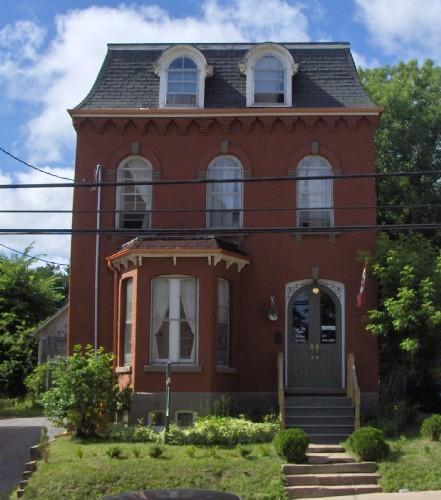
155 Euston Street – Built by William Wright

From Canada’s Historic Houses:

155 Euston Street is a Second Empire style, three storey, former town house located near what was traditionally referred to as Gallows Hill. The large building was constructed in 1875 for the manager of the Guardian newspaper and printer, Joseph William Mitchell (1836-1888) and his wife Barbara Rachel Ann Hooper (1847-1934). The designation encompasses the building’s exterior and parcel; it does not include the building’s interior.

And the Wright connection:

In 1875, the Mitchells’ hired local architect, Richard Weeks to design their home. William Wright was hired as the contractor to build the home that was described in the Semi Weekly Patriot newspaper as a neat, three-storey, brick cottage.

And evidently you can stay there for only $49 per night!

3 Hillsborough Street – Built by William Wright

3 Hillsborough St.

….The Adams family of New London owned this land from the 1820s into the twentieth century. During that time, in 1872, William Adams leased to Charles McFarlane the corner property for 21 years and Mr. McFarlane agreed “to erect a flat roof house”. It appears Mr. McFarlane reneged on the flat roof as, in 1875, builder William Wright constructed a house and shop for Mr. McFarlane, and it seems to be the gable roofed house there today.

(Source: Virtual Tour of Charlottetown, Prince Edward Island)

Tracking Down James Reid

James Reid is my 4th great grandfather, father to Catherine (Reid) Lewis. In Catherine’s obituary, this was written of him:

Mr. James Reid, father of the deceased, was a soldier in the King’s army, and after the Irish rebellion in 1799 was crushed, he came with his family to Canada.

A little more information

Her maiden name was Reid, born at Race End, Donegal, Ireland. The clan from which this branch of the Reid family sprang was noted in Scotland in the seventeenth century. Members of the family lived to the patriarchal age of 90 and 100 years.

Additional Reid family history.

So here are my questions for a professional or more seasoned amateur genealogist than myself:

  1. What is the King’s army that this refers to, and do enlistment records exist for this army?
  2. Would their travel from Ireland to Canada be catalogued somewhere in a passenger manifest (it was likely around 1830)?
  3. What are the records available in Ireland or Scotland during the 18th and 19th century, if any?

With a name like “James Reid,” I am not expecting easy results, or really any results, but if military records do exist, that may be the best chance.

Obituary of Catherine (Reid) Lewis

OBITUARY
_________
Mrs. Catherine Lewis Died at Lyn
Colchester County, June 15
_______________

Mrs. Catherine Lewis died at Lyn Colchester County, June 15, aged 86 years. Her maiden name was Reid, born at Race End, Donegal, Ireland. The clan from which this branch of the Reid family sprang was noted in Scotland in the seventeenth century. Members of the family lived to the patriarchal age of 90 and 100 years. Continue reading Obituary of Catherine (Reid) Lewis

Biography of Wilbur Fletcher Lewis

This biography originally appeared in “Middlesex County and Its People”:
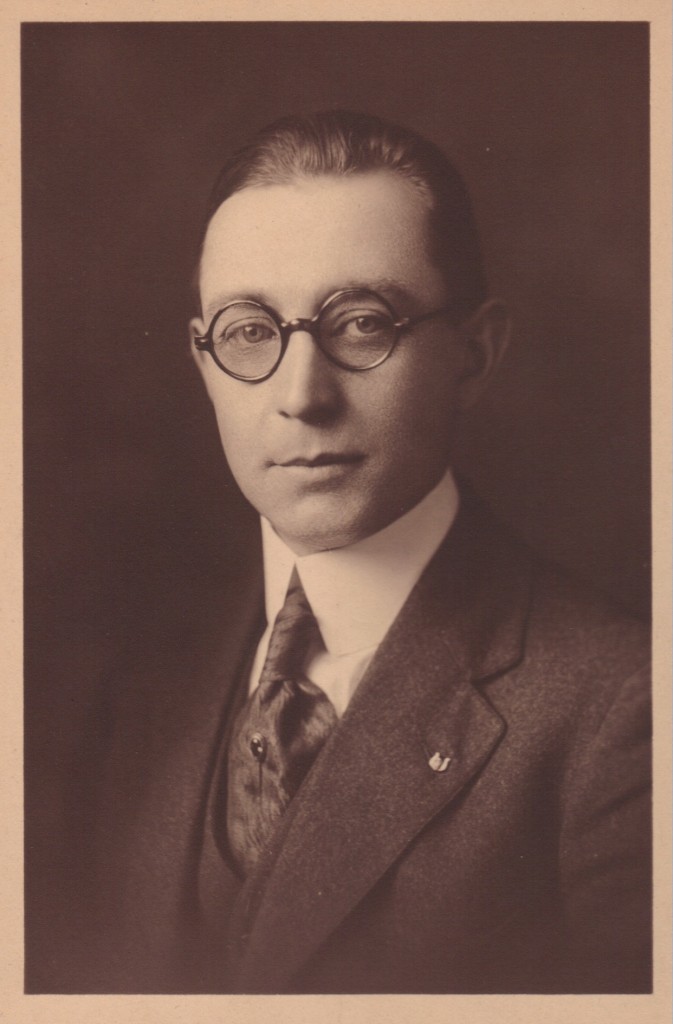
Wilbur-Fletcher-LewisWILBUR FLETCHER LEWIS–For more than eighteen years, Wilbur Fletcher Lewis has been identified with the building, real estate, and insurance business at Somerville, first in association with his father, and since 1918, for himself. He is well known in fraternal and club circles, and has always been interested in athletics, especially in baseball. The business is operated under the name of S. H. Lewis and Son, and the office is located at 253 Elm Street.

Wilbur Fletcher Lewis, son of Stephen Henry and Laura Blanche (Wright) Lewis (see preceding biography), was born in Somerville, Massachusetts, February 28, 1889. He received his earliest education at the Edgerly School, and then continued his studies in the Highland School, from which he was graduated in 1904. The following fall he became a student in the English High School, from which he was graduated in 1908, after which he entered Berkley Preparatory School, where he continued his studies for one year.

Continue reading Biography of Wilbur Fletcher Lewis

Biography of Stephen Henry Lewis

This biography originally appeared in “Middlesex County and Its People”:

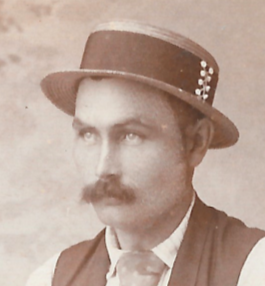
stephen lewis headshotSTEPHEN HENRY LEWIS–For more than four decades, Mr. Lewis was engaged in the business of carpenter and builder at Somerville, and during those years established a prosperous and prominent industry, which flourished until his retirement from active affairs in 1918. Industrious and enterprising, he had added many important real estate and insurance activities to his business and was recognized as a leader in the trade. His business has continued under the management of a son, Wilbur Fletcher, and to Mr. Lewis is the reward and comfort, the competence which his efforts have earned. Continue reading Biography of Stephen Henry Lewis